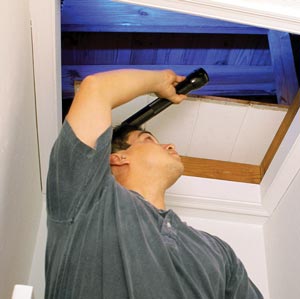
If you're shopping for a new home, you simply can't afford to put pen to paper without getting a complete general home inspection.
Often, when people sell their homes, they try their best to cover up at least a few of the flaws. While it may be natural for home sellers to try to frame their house in the best possible light, all too often, sellers attempt to whitewash over significant problems with the home. While some of these hidden issues might be purely aesthetic, other times they can be quite serious. That’s why if you’re in the market for a new home, you need to make sure you schedule a thorough home inspection before you even think about closing the deal.
What Exactly Is A General Home Inspection?
Sometimes, even the most beautiful, modern home can be full of invisible dangers. Fortunately, experts are available to thoroughly analyze a home’s structural integrity and evaluate its potential safety issues. So, what exactly do these general home inspectors look at?
A qualified home inspector will evaluate the house’s roof for sagging, leaking and signs of rot. He will also look at soffits and fascia boards to look for missing pieces, rust and rot. Gutters and downspouts will be evaluated for sloping problems, clogs and missing pieces. In addition, windows, doors and porches are generally evaluated for evidence of foundation issues.
Inside the home, floors, walls and ceilings are checked for signs of leaking. Also, basements are usually evaluated for potential flooding issues. Appliances like dishwashers and water heaters are checked for problems, while chimneys are checked for clogs and missing mortar. In addition, a home inspector will analyze the home for evidence of mold, mildew, fungi and rodent infestations.
Most importantly, safety issues are addressed. This includes evaluating the home for potential gas leaks and dangerous chemicals, elements and fumes like, lead, asbestos, radon, formaldehyde, methane and radiation. Also, electrical wiring is checked for functionality and potential fire danger.
Who Needs A General Home Inspection?
Anyone who is planning to purchase a new home will likely require the services of a home inspection professional. While many people think they can visually discern the difference between a safe, efficient home and one that harbors structural problems, the fact is: it can often be quite difficult to distinguish between a dream home and a nightmarish money pit.
What Are The Benefits of A General Home Inspection?
Obviously, no one wants to buy a lemon of a home. Too often, homeowners are forced to shell out thousands of dollars on home repairs for problems that existed long before they took over as the new owner. However, without a doubt, the most important benefit offered by a home inspector has to do with safety issues. The sad fact is that some homes pose fire hazards due to poor electrical wiring, and health dangers from chemical and biological threats. Not only can a proper, thorough home inspection save you a bundle in the long run, it can also provide you with peace of mind.

Ryan, you for making an important point. Fortunately, most home buyers today do get a home inspection.
The bigger consumer awareness issue is; How do you choose a qualified home inspector?
Especially in states like Colorado where there is no regulation of home inspectors or home inspections. Someone could literally be released from jail one day and do home inspections the next, with free access to someone’s home.
So, what can and should a home buyer do. I’ve listed criteria I believe should be considered at a minimum at http://id-inspections.blogspot.com .
I encourage you and others to start your home inspector shopping with this guide.
Regards,
Jon Rudolph
ID Property Inspections, Inc.
www.id-inspections.com
Jon Rudolph – August 19, 2009 , 6:50 PM